Here's how we've solved it in the Homie app:
that you do regularly.
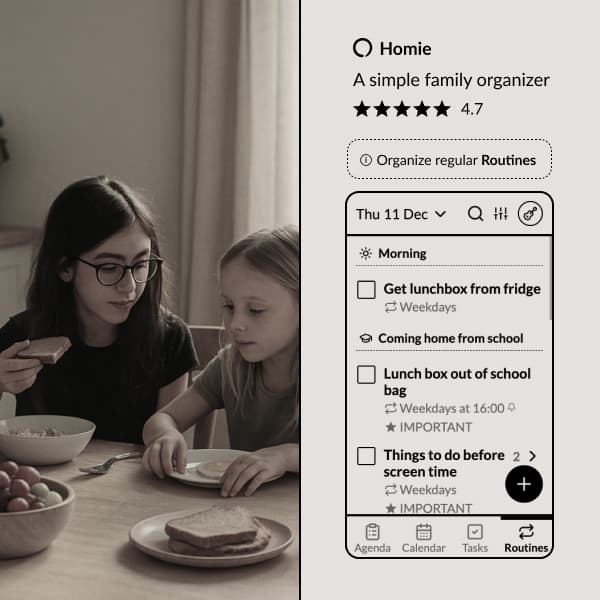
Routine categories work like checklists in your day.
Important routines, like taking your medicine, will move to the next day until done.
Subtasks for routines with multiple steps like "Spring cleaning".
Skip or move a routine once.
Notifications for important routines.
Every family has routines. Morning routines before school. Evening routines before bed. Weekly chores. Seasonal tasks like changing the smoke alarm batteries.
The problem is keeping track of them. Either they live in someone's head (usually one parent's), or they get written down and forgotten. Homie makes routines visible so everyone knows what needs to happen.
Routines that repeat themselves
Set up a routine once, and it appears on the days it's needed. A weekday morning routine shows up Monday through Friday. A monthly task like changing the air filter appears on the first of each month.
Examples:
- Leaving the house — on Weekdays
- Yearly Christmas preparations — yearly on Dec 19
- Spring cleaning — yearly in March
- Take out trash — every Tuesday
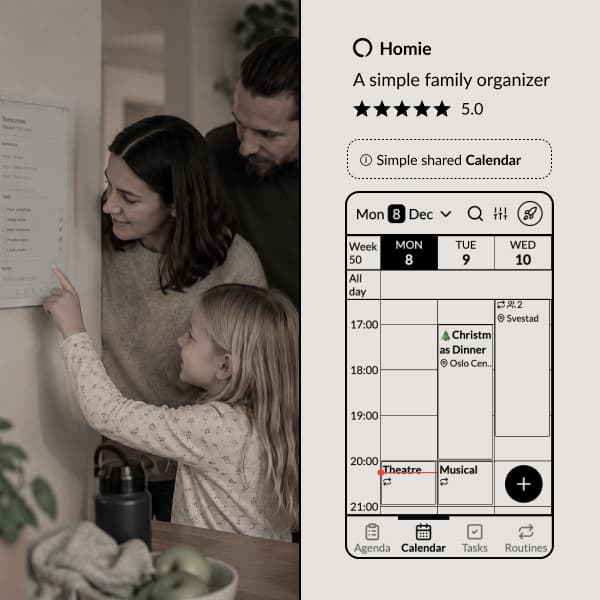
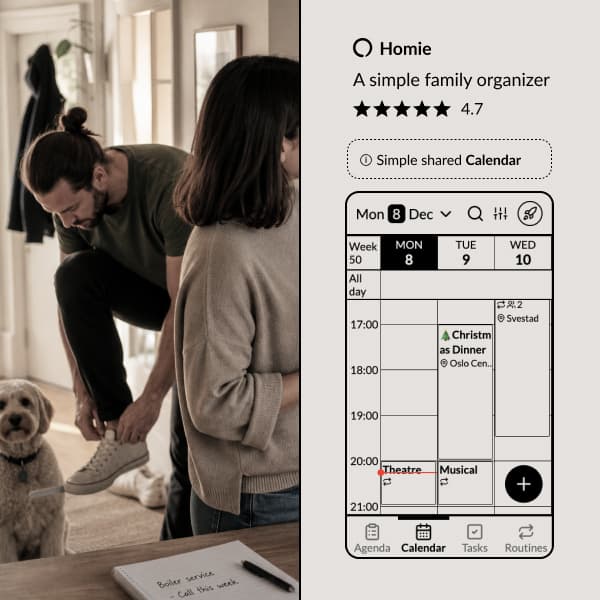
You don't have to remember to add these things to your calendar. They're just there when they need to be.
Checklists that organize your day
Routine categories work like checklists in your day. You can have a "Morning" category with all the things that need to happen before school, an "After School" category for homework and activities, and an "Evening" category for bedtime prep.
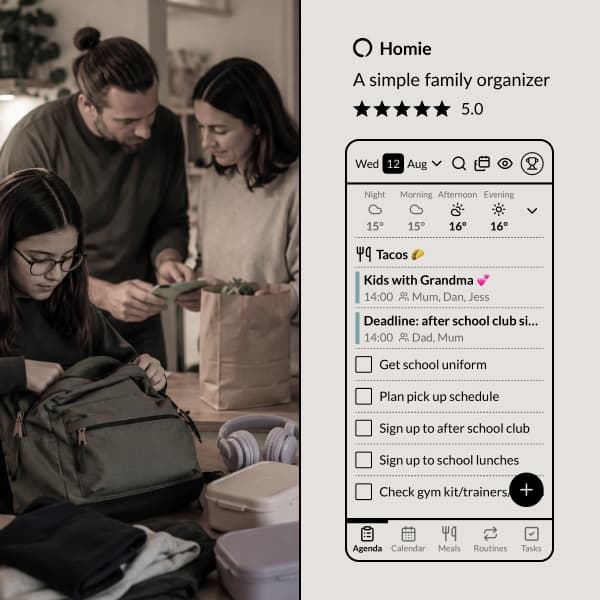
Each family member can see their own routines for the day and check them off as they go.
Important routines roll over
Some things can't be skipped. Taking medication. Feeding the dog. Important routines can be marked to roll over to the next day if they're not completed.
This means if you forget to check off "give dog heartworm medicine" on Tuesday, it'll still be there on Wednesday—you won't accidentally skip it.
Subtasks for complex routines
Some routines have multiple steps. A "Leaving the house" routine might include: pack backpack, brush teeth, put on shoes, grab lunch. Breaking it down makes it easier for kids to follow without constant reminders.
A "Spring cleaning" routine might have a dozen subtasks: dust ceiling fans, clean under beds, wash windows, and so on. Check them off over a few days.
Skip or reschedule when life happens
Life isn't perfectly predictable. You can skip a routine for today, or move it to a different day. The routine still repeats as normal after that—you're just adjusting this one occurrence.
Going on vacation? Skip the weekday routines for that week. Need to move trash day because of a holiday? Reschedule it to Wednesday instead.
Skipped one by mistake? Undo is right there. And when you move a routine, its reminder moves with it.
Find the right routine fast
Give a routine an emoji so you can spot it at a glance, on the agenda and in the list. Switch between All, Categories and Completed to see your routines the way that helps right now.
Overdue routines show up in Today, so the one that slipped yesterday doesn't quietly disappear.
Notifications for what matters
Get notified about important routines at the time they need to happen. Morning routine notification at 7am. Medication reminder at 8pm. You decide what needs a nudge.
Why visible routines work
When routines are written down and visible—on a tablet mounted in the kitchen, for example—kids can check them without asking. They know what comes next. They can take ownership of their own morning routine instead of being reminded every step of the way.
This isn't about controlling kids. It's about giving them the structure to be independent.
Ready to bring structure to your family's day? Try Homie free.
Ready to organize your family?
Try Homie free and see how simple family organization can be.